Light Biohacking: Why the 1001K Tone Should Be on Your Design and Wellness Radar

Color Temperature and Biology: A Direct Relationship
Most of the “warm” light sources we use daily range between 2700K and 3000K. They are pleasant and visually comforting, but they still contain some blue spectrum, which prevents the brain from fully activating the mechanisms associated with rest. To achieve true neuronal disconnect, we must return to the lighting conditions that defined our nights for thousands of years: fire, embers and very deep sunsets.
In such scenarios, the presence of blue light was practically zero, and it is precisely that absence that allows the body to enter night mode. This is why, when descending to extreme temperatures such as 1001 Kelvin, we not only obtain a very warm light, but a spectrum that naturally supports circadian rhythms and promotes genuine relaxation. This tone becomes an effective tool for preparing the mind and body for rest.
Why Lower the Color Temperature So Much?
Reducing the color temperature to ranges close to 1000K is not an aesthetic choice but a biological strategy. As we move downward in Kelvin, blue and green wavelengths disappear almost entirely—and these are exactly the tones the brain interprets as signals of activity. If they are present, even minimally, the circadian system maintains a state of mild alertness that makes it difficult to transition into rest.
At such low temperatures, light becomes distinctly reddish, resembling firelight or a deep sunset. This type of illumination sends the brain a clear message: the day is over. It supports melatonin production, reduces accumulated cortisol and helps the nervous system shift into a state of recovery.
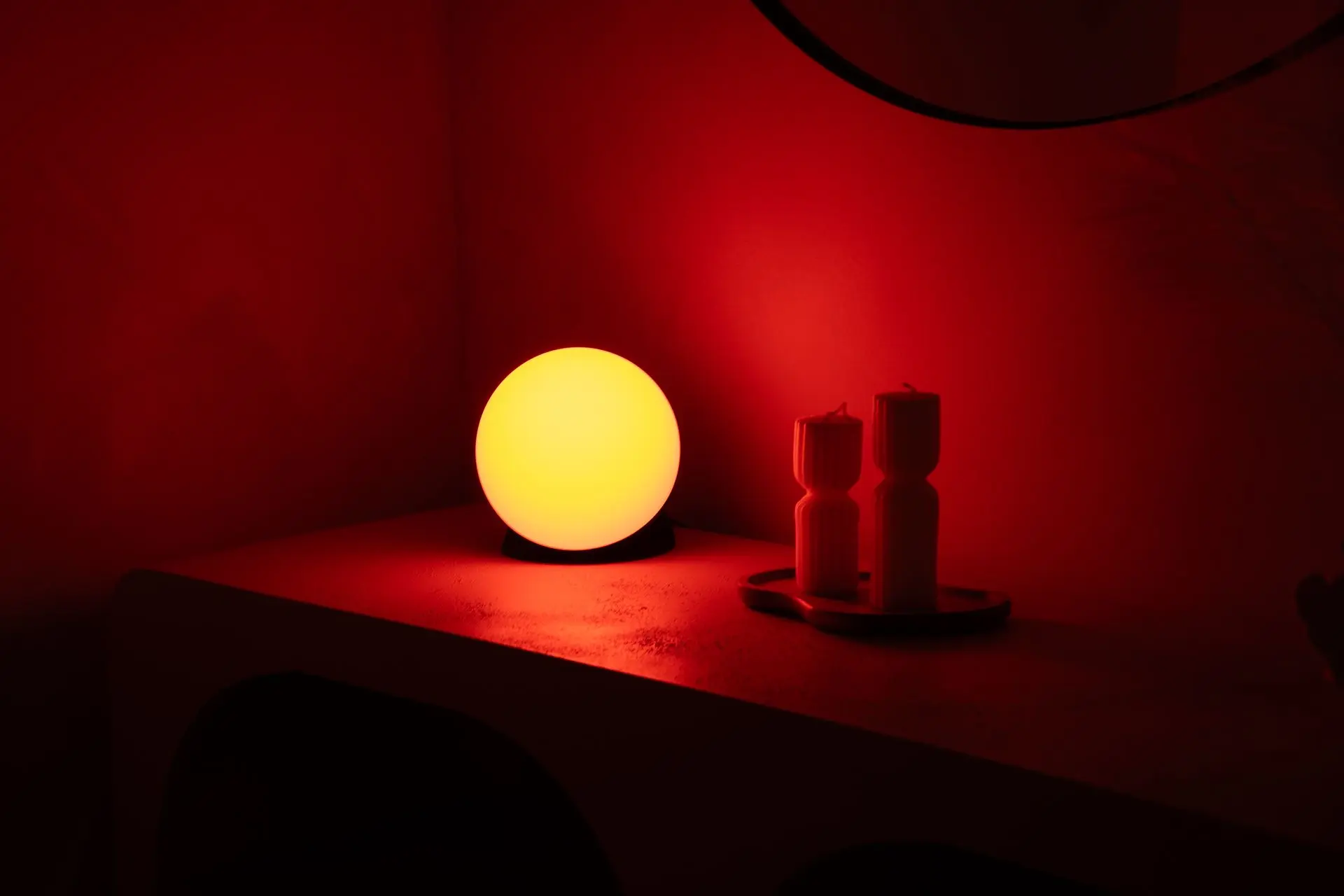
Color temperature and biology
The usual “warm” light, between 2700K and 3000K, is comfortable but still contains blue spectrum, which prevents a true disconnection of the circadian system. To achieve deep relaxation, we must get closer to the natural conditions of the night: fire, embers and sunsets with no blue component. When we go down to extreme temperatures such as 1001K, we obtain a very warm light that respects biological rhythms, supports melatonin production and prepares body and mind for genuine rest.
The real challenge in a lighting project
The real challenge in a lighting project is not just choosing a beautiful or efficient luminaire, but ensuring that the same space works well at every moment of the day. In the morning and afternoon we need a light that activates us, that allows us to work, read or carry out tasks with precision. But at night that same light becomes overly stimulating: it interferes with rest, disrupts the circadian rhythm and breaks the atmosphere we want to create.
Our CustoMYLED department
CustoMYLED makes it possible to go beyond the usual limits of tunable white and create luminaires capable of providing active, efficient light during the day, while also descending to ultrawarm spectra such as 1000K at night. This versatility opens the door to a type of lighting that adapts to the user’s rhythms, the architectural concept and the desired atmosphere, without compromising the aesthetics or the technical integrity of the product.
The Real Challenge in
a Lighting Project
The real challenge in a lighting project is not just choosing a beautiful or efficient luminaire, but ensuring one can adapt to different needs throughout the day. Morning hours require activating, precise light, while nighttime demands something much softer and biologically coherent. Standard luminaires rarely provide both; they offer limited color temperatures and cannot reach the ultrawarm ranges required to support true circadian rest. Designers are often forced to choose between functionality and wellbeing, when today's users actually need both.
The real challenge in a lighting project is not just choosing a beautiful or efficient luminaire, but ensuring that the same space works well at every moment of the day. In the morning and afternoon we need a light that activates us, that allows us to work, read or perform tasks with precision. But at night that same light becomes too stimulating: it interferes with rest, disrupts the circadian rhythm and breaks the atmosphere we aim to create.
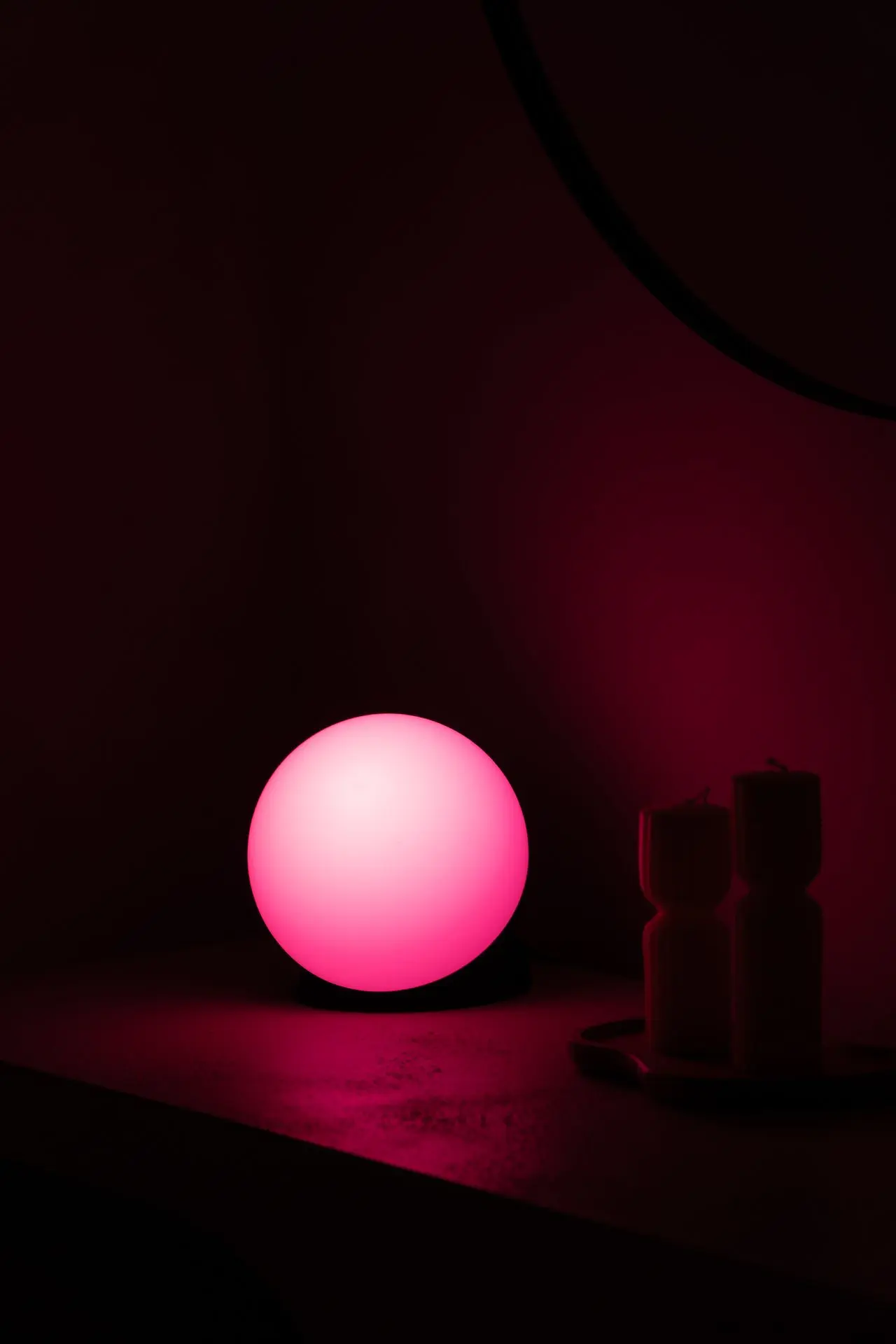
The Differential Advantage: Our CustoMYLED Department
In a market where most luminaires follow standard ranges and predefined solutions, CustoMYLED stands out as a genuine differentiator. It is our specialized department for bespoke lighting engineering, created for projects that require more than a catalogue product. This is not about adjusting superficial details but about transforming light to meet real needs in health, design and functionality.
CustoMYLED makes it possible to go beyond the usual tunable white limits, creating luminaires that provide active, efficient daylight illumination while also reaching ultrawarm tones around 1000K for nighttime. This versatility allows lighting to adapt to user rhythms, architectural concepts and the desired atmosphere—all without compromising aesthetics or technical integrity.